Lessons · Architecture · Zero Trust vs SASE vs SSE
This lesson is the layer pick. How a given product implements ZTNA (APM, ZPA, Prisma Access, Cisco Secure Access) lives on the vendor pages. Do not skip the model/stack/network split and then argue SKUs.
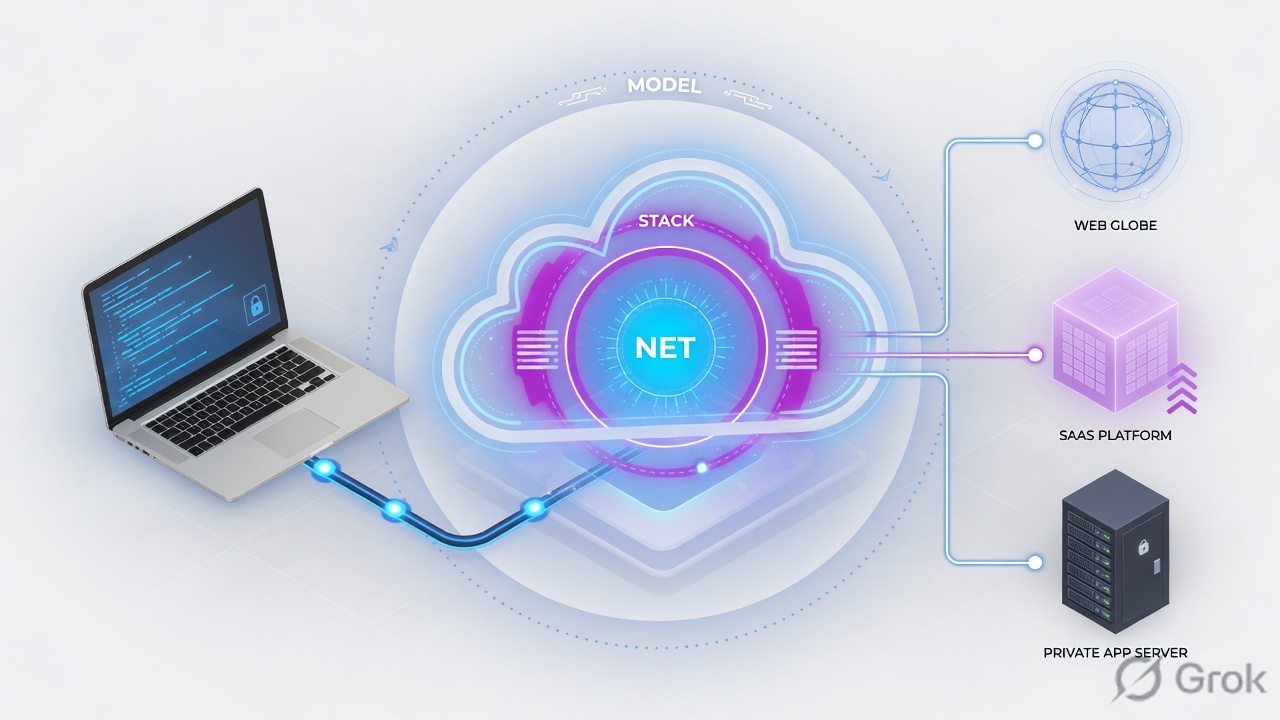
Zero Trust is a security model: no implicit trust from network location (NIST SP 800-207). SSE is the cloud-delivered security stack you typically operate as SWG + CASB + ZTNA + DLP. SASE is SSE plus the networking layer (SD-WAN). If you already have a working SD-WAN, buy SSE. If you are greenfield or the WAN is end-of-life, buy SASE. Buying a vendor is not implementing the model.
Why the board mixes the three
The day-one ticket is always the same: “We need Zero Trust. Which SASE do we buy?” Wrong question. Zero Trust is not a product category. SASE is not a synonym for Zero Trust. SSE is not “SASE without the marketing.”
Three silent-wrong states look identical in a board deck (one slide, one logo):
- The program is named Zero Trust; the purchase is a cloud proxy; identity and device posture were never wired.
- SSE is live; the old on-prem proxy and branch firewalls were never retired — two policy engines, two answers in audit.
- SD-WAN was ripped out two years early to “go SASE,” then the SSE vendor and the WAN vendor still don’t share a policy plane.
Correct framing: “We are pursuing a Zero Trust model. We will deliver it as SSE (security stack) or SASE (stack + network) from vendor X, phased against our SD-WAN contract.” If the CISO asks you to buy Zero Trust, translate that before anyone opens a quote.
Concept — model, stack, network
Hold three layers. They nest. They are not interchangeable.
Read outside → in. The model contains the architecture. The architecture contains the stack. You can implement Zero Trust without buying SASE. You cannot buy SASE and skip the model work.
Zero Trust is the model. SSE is the security stack. SASE is SSE plus SD-WAN. We pick the stack first if the WAN is already paid for.
Zero Trust
Model. NIST SP 800-207: no implicit trust from location or ownership. Identity, device, and context before every resource session. Not a SKU.
SSE
Stack. Cloud-delivered security for web, SaaS and private apps. Typically SWG + CASB + ZTNA + DLP. No SD-WAN in the category.
SASE
Architecture. Gartner 2019: WAN + security as a cloud service. SASE = SSE + SD-WAN. One vendor or a designed two-vendor pair.
ZTNA
One control inside SSE. Per-app access to private apps. Replaces VPN for that job. It is not the whole Zero Trust model.
| Term | Layer | What you actually buy / do | What it is not |
|---|---|---|---|
| Zero Trust | Model | Identity, device posture, least privilege, continuous verification, resource-centric policy (NIST SP 800-207). | A box, a licence, or “we turned on ZTNA.” |
| SSE | Security stack | Cloud SWG, CASB, ZTNA, DLP — usually one console, PoPs close to users. FWaaS often rides along. | SD-WAN. Not the WAN underlay. |
| SASE | Architecture | SSE plus SD-WAN / WAN edge, same (or tightly paired) policy plane. | A replacement for Zero Trust. SASE can enforce the model; it is not the model. |
SSE stack — SWG, CASB, ZTNA, DLP
Gartner’s 2021 SSE category is the security half of SASE: cloud services that control access to websites, SaaS and private applications regardless of user location. The three services every vendor write-up agrees on are SWG, CASB and ZTNA. In production you operate a fourth as first-class: DLP, because the asset you are protecting is data, not a URL category.
FWaaS (cloud NGFW) is commonly bundled and is what you add when you retire branch firewalls. It is still security, so it sits in SSE. It is not SD-WAN — path selection and last-mile remain the network half.
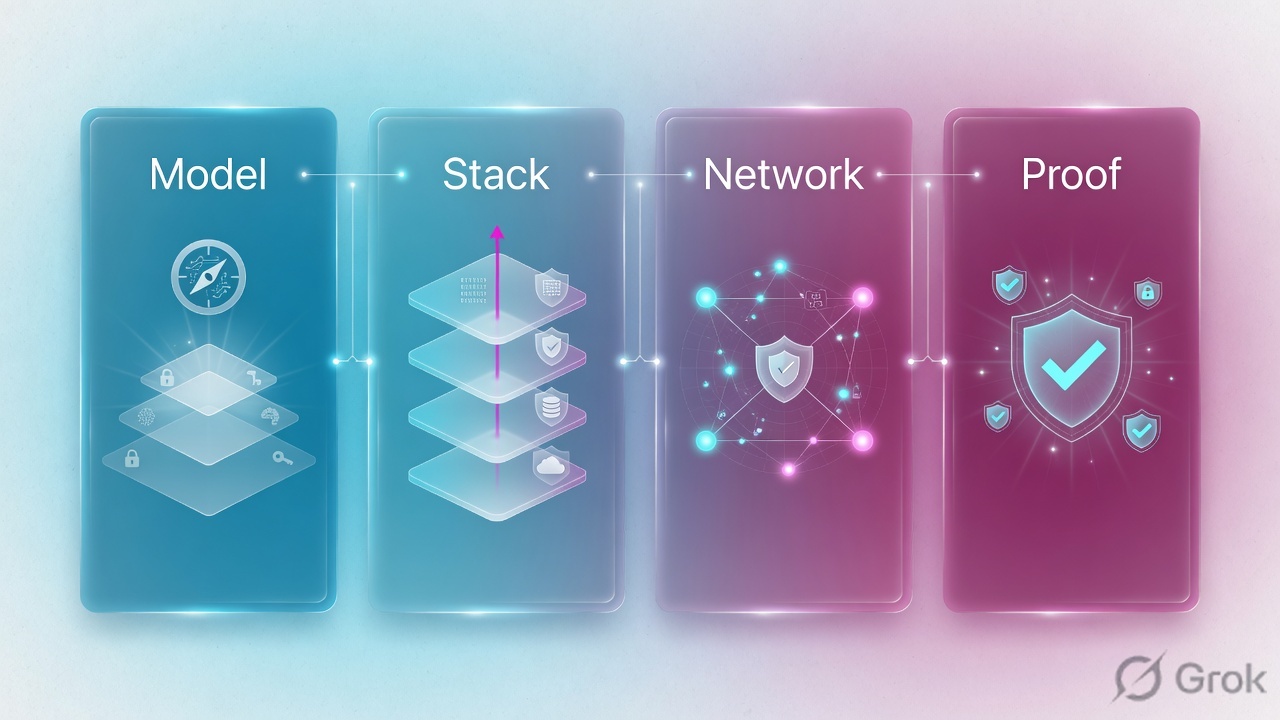
Left → right. DLP is drawn as a peer because it must fire on web, SaaS and private-app paths — a CASB-only DLP misses the browser upload to a personal drive.
| Service | Job | Replaces (when you decommission) |
|---|---|---|
| SWG | Inspect user-to-web: URL, malware, TLS inspection, acceptable use. | On-prem explicit / PAC proxy. |
| CASB | SaaS visibility and control — inline and/or API. Shadow IT, tenant restriction, app instance. | Point CASB, “SaaS DLP” that never saw the browser. |
| ZTNA | Broker per-app access to private apps. Default deny. No network-level VPN. | SSL-VPN / full-tunnel remote access for those apps. |
| DLP | Classify and stop sensitive data on the paths above. Same labels, one incident queue. | Channel-specific DLP that disagrees with itself. |
| FWaaS (optional in SSE) | Cloud NGFW / IPS for ports that are not “web or SaaS.” | Branch firewalls, once the underlay and ops team are ready. |
| SD-WAN (SASE only) | Path selection, QoS, last-mile, site-to-site. Not a security control. | MPLS + DIY overlay — on a SASE buy, not on an SSE-first buy. |
Gartner’s original SSE write-up centred on SWG + CASB + ZTNA; FWaaS is commonly listed as a fourth. This page treats DLP as first-class because that is how you actually run the stack. Do not cite “Gartner says SSE = DLP.” Cite Gartner for the category (security half of SASE). Cite your data-protection policy for putting DLP on the same plane as SWG/CASB/ZTNA.
How they nest
Zero Trust does not require SASE. SASE does not equal Zero Trust. ZTNA is one enforcement point inside SSE that implements a Zero Trust access pattern for private apps. Identity (IdP, MFA, device compliance) is a prerequisite, not an SSE feature.
A laptop with a ZTNA client to three intranet apps and an open split-tunnel to the internet is not “Zero Trust.” You still have an implicit-trust web path. SWG + DLP close that path. CASB closes SaaS. The model is the whole resource set, not the private-app broker.
| If someone says… | Translate to |
|---|---|
| “We bought Zero Trust.” | Which control? ZTNA, SWG, identity, microseg? Name the resource and the verifier. |
| “We need SASE.” | Do you also need a new WAN, or only the security half (SSE)? |
| “SSE without DLP.” | You have a proxy and an app broker. You do not yet have a data control plane. |
| “Single-vendor SASE is always simpler.” | One throat to choke vs best-of-breed SSE on an incumbent SD-WAN. That is a trade-off, not a law. |
CISO decision table
The WAN contract decides the architecture. The identity program decides whether Zero Trust is real. The data-protection program decides whether SSE is more than a proxy. Run the table before a bake-off.
Most Indian SI estates land in the middle column: paid SD-WAN, VPN still in production, SaaS exploding. SSE-first is the default, not a compromise.
| Situation | Deploy | Why | Do not |
|---|---|---|---|
| Recent SD-WAN (≤2 years left on contract) | SSE-first on the existing underlay | Security value now; WAN already paid. | Rip the overlay this quarter to “go SASE.” |
| SD-WAN EoL in 12–24 months | SSE now; evaluate SASE at renewal | ZTNA/SWG do not wait for a WAN RFP. | Freeze security until the WAN bake-off ends. |
| Greenfield, no WAN owner, many branches | Full SASE (SSE + SD-WAN together) | One fabric, one policy plane, one support contract. | Buy SSE then a second SD-WAN you will rip in 18 months. |
| Data-protection / SaaS-heavy, WAN is fine | SSE with CASB + DLP as day-one scope | The asset is data leaving browsers and tenants. | SD-WAN-labelled “SASE” with weak data controls. |
| Identity-first Zero Trust program, VPN still live | ZTNA phase 1 (SSE), then SWG/DLP | Clearest user win; smallest blast radius. | “We bought SASE, so we’re Zero Trust.” |
| Ops team fluent in vendor A’s NGFW / SSE | Prefer that vendor’s SSE/SASE as an example path | Policy-writing fluency is 2–3 months. Continuity is a real cost. | Pick from a ranking slide. This page does not rank Magic Quadrants. |
| Tolerance for two consoles vs lock-in | Best-of-breed SSE + incumbent SD-WAN, or single-vendor SASE | Integration work vs one throat to choke. State the trade-off in the memo. | Pretend either choice is free. |
Products that ship SSE and/or SASE include Zscaler, Netskope, Palo Alto Prisma Access, Cisco Secure Access / Umbrella, Cato, Cloudflare, Fortinet, and others. Use them as examples of a delivery vehicle. Do not treat a blog table as a Gartner Magic Quadrant. If you need a ranking, cite the current Gartner reprint you actually hold — this page does not invent placements.
Do — Side A / B / C
Lab-free architecture runbook. Output is a one-page CISO memo, not a CLI. Facts below are the ones you collect; they are not invented VIP addresses.
Strategy › Layer pick › FY26 decision
Memo fields the board actually reads
Source pattern: Gartner SASE (2019) / SSE (2021) as category names; NIST SP 800-207 as the model. Fill WAN incumbent and renewal dates from your contracts — do not copy these labels into production.
Side A — facts you collect before a quote
-
WAN and VPN inventory
SD-WAN vendor, contract end, overlay health. SSL-VPN user count and whether it still dumps people onto a VLAN. If clients can reach private apps without the future ZTNA broker, that is a bypass — same class of bug as hitting a pool IP instead of a VIP.
-
Identity and device
IdP (Entra / Okta / Ping), MFA coverage, device compliance signal. SSE consumes these. If MFA is optional and posture is empty, ZTNA will still grant based on a password. That is not the model. Source: NIST SP 800-207 — authentication and authorization as discrete functions before a resource session.
-
App and data inventory
Private apps (ZTNA cannot broker what you cannot name). SaaS tenants (CASB). Data classes that must not leave (DLP). VPN never required an app list; ZTNA does. Budget discovery as a phase-0, not a surprise.
Side B — pick the layer and the first control
-
Score the decision table
Recent SD-WAN → SSE-first. Greenfield / EoL WAN + appetite for one vendor → SASE. Identity-first with VPN pain → ZTNA as SSE phase 1 regardless. Write the row you chose in the memo; do not hide it in a 40-page RFP.
-
Phase the SSE stack
Phase 1: ZTNA (replace VPN) after app inventory. Phase 2: SWG (replace on-prem proxy). Phase 3: CASB + DLP on the same labels. Phase 4: FWaaS only when branch NGFW retirement is a real project. Source: SSE as security-only subset — Cisco SASE explainer; Gartner SSE as web / SaaS / private-app access.
-
Write the decommission in phase 1
For each SSE service, name the legacy box it kills and the date traffic stops hitting it. Running SSE beside the old proxy for 18 months is the default failure, not a “careful migration.”
-
Vendor as continuity, not a ranking
If the SOC already writes Palo Alto or Zscaler or Cisco policy every day, that fluency is a cost input. Examples: Prisma Access for an existing PAN-OS estate; Cisco Secure Access where Umbrella/SD-WAN is incumbent; a CASB-strong SSE where data is the driver. Not a Magic Quadrant.
Side C — proof the board will accept
-
One sentence that uses all three terms
“Zero Trust is the model. This year we deliver it as SSE (SWG + CASB + ZTNA + DLP) on the current SD-WAN. SASE consolidation is a renewal question, not a Q1 rip.” If the sentence needs a logo to make sense, it is still wrong.
-
Pilot evidence, not a PO
ZTNA: named app, named IdP group, session log with user + device + app — not “VPN users migrated.” SWG: TLS inspect on a pilot OU, block page + log. DLP: one data class, one incident in the SSE queue, legacy channel silent. Identity: MFA + posture required on the ZTNA app.
-
Dual-perimeter test
From an on-prem VLAN, hit a URL the SSE blocks. If it still loads through the old proxy, you have two engines. Fix steering (PAC, tunnel, GRE, explicit proxy) or you failed Side B even if the licence is paid.
- Memo names model / stack / network in one paragraph. No “we bought Zero Trust.”
- Decision-table row is explicit (SSE-first, SASE-now, or ZTNA-only).
- Phase 1 = ZTNA + app inventory + VPN decommission date.
- Pilot log: user, device, app or URL, action. Same policy for office and WFH.
- Legacy proxy/VPN has a kill date, not a “overlap indefinitely” footnote.
Zero Trust = model (NIST SP 800-207).
SSE      = security stack this year: SWG + CASB + ZTNA + DLP
           on incumbent SD-WAN <vendor / contract end>.
SASE     = SSE + SD-WAN — evaluate at <renewal date>,
           not a Q1 rip-and-replace.
Phase 1  = ZTNA for <N private apps>; VPN retire date <YYYY-MM>.
One session after go-live
After SSE is steered, a WFH user opening a private app and a SaaS tenant does this:
- Endpoint agent (or PAC / GRE) sends the session to the nearest SSE PoP. It does not land on a campus VLAN “because VPN.”
- SSE asks the IdP: who, which device, which MFA. Fail closed if posture is missing — that is the model, not a nice-to-have.
- ZTNA allows only the named app. SWG inspects internet. CASB + DLP inspect the SaaS path. Same labels.
- If this is SASE, the branch underlay is the same vendor’s SD-WAN (or a designed pair). If this is SSE-first, the existing SD-WAN only carries bits; policy still lives in SSE.
If WFH is on SSE and campus is still on the old proxy, you built the dual perimeter on purpose. Steer both. The model does not care that the user is “inside.”
Traps + proof
| Symptom | Likely cause | Proof / fix |
|---|---|---|
| CISO: “We bought Zscaler / Prisma / Cisco, so we’re Zero Trust.” | Tool confused with model. | Name the resources, the verifier (IdP + posture), and the default-deny. Re-read Concept. |
| Audit: on-prem users and WFH users get different blocks | Dual perimeter — SSE live, old proxy/firewall never retired. | Same URL from both paths. Decommission in phase 1. Re-read Side B. |
| ZTNA project stalled for months | No app inventory. VPN never needed one. | Discovery as phase 0. Do not 1:1-map “VPN group = ZTNA app.” |
| SASE RFP while SD-WAN is two years young | Architecture fashion over contract math. | Decision table: SSE-first. Re-read CISO table. |
| SSE with no DLP; “CASB later” | Proxy-only purchase wearing an SSE badge. | One data class on web + SaaS in the same queue before calling it SSE-complete. |
| SOC cannot write policy after go-live | Vendor picked from a slide; fluency ignored. | Treat retraining as a 2–3 month cost. Continuity is a valid input, not a ranking. |
| ZTNA on, split-tunnel internet wide open | ZTNA treated as the whole model. | SWG + DLP on the internet path. ZTNA is one control. |
| Single-vendor SASE vs two-vendor fight with no criteria | Vendor pitches, no trade-off. | Lock-in + one console vs best-of-breed + integration. Write both in the memo. |
- Three terms used correctly in the memo: model / stack / network.
- Decision-table row selected from WAN facts, not from a logo.
- IdP + MFA + device signal on the first ZTNA app.
- App inventory exists before VPN kill.
- SWG/DLP pilot OU steered; campus and WFH same action.
- Legacy VPN and proxy have dates, owners, and a dual-perimeter test.
- No Magic Quadrant copied into the deck unless you hold the reprint.
Knowledge check
Six judgment calls on which layer to pick — not vendor trivia.
Sources
- NIST SP 800-207 — Zero Trust Architecture (model: no implicit trust from location; authN/authZ before a resource session)
- NIST SP 1800-35 — Implementing a Zero Trust Architecture
- Gartner glossary — Secure Access Service Edge (SASE) (category coined 2019: WAN + security, cloud-delivered)
- Cisco — What is SASE (SSE = security half; SASE adds SD-WAN; SWG / CASB / ZTNA / FWaaS listed as security services)
- Palo Alto Networks Cyberpedia — What is SSE (Gartner 2021 SSE: ZTNA, SWG, CASB, FWaaS)
- Zscaler glossary — What is Security Service Edge (SSE as SASE subset; DLP/FWaaS as common platform add-ons)
- CISA — Zero Trust Maturity Model
Related: F5 APM Zero Trust access · AI identity — the new insider threat